

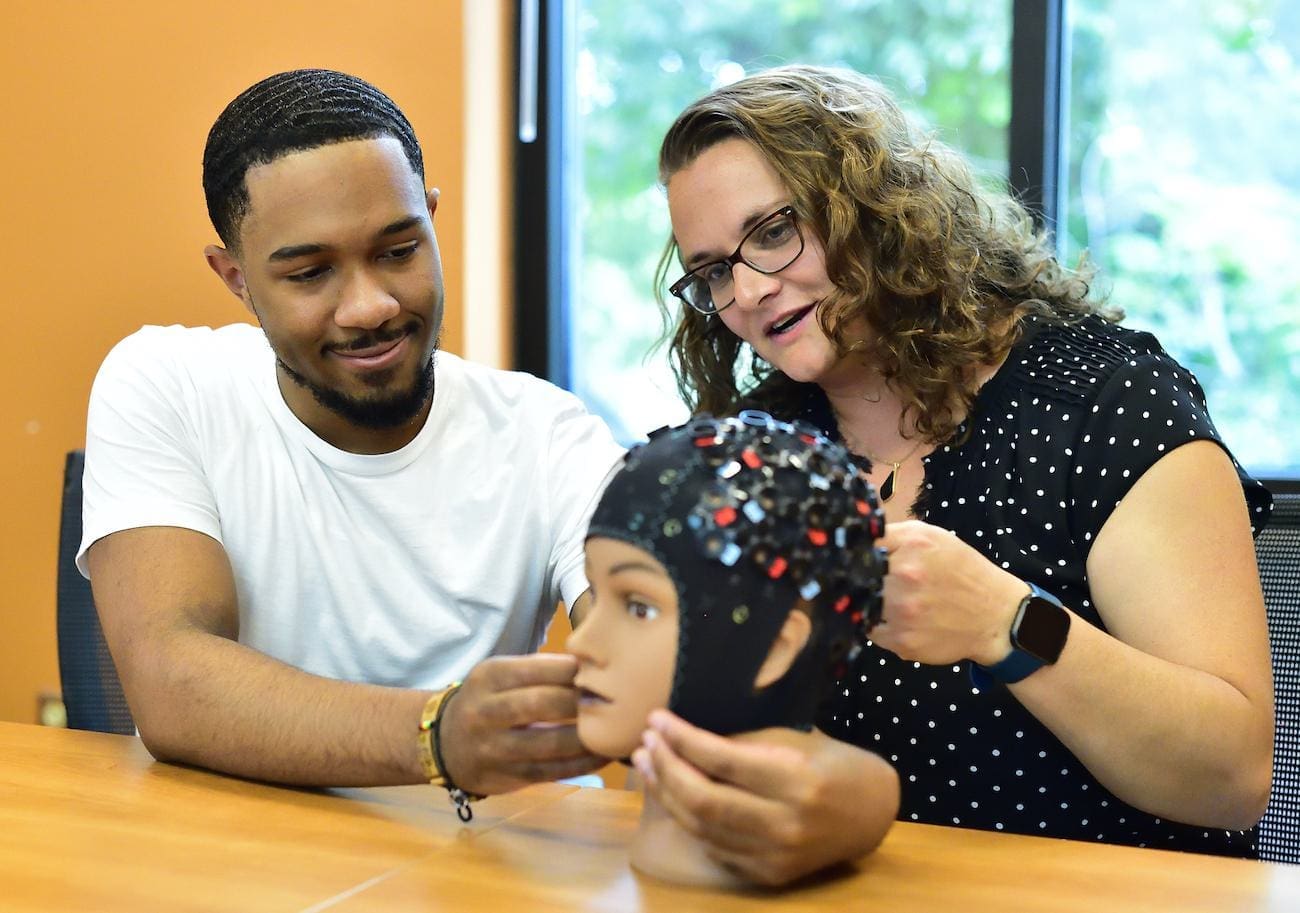
Psychology students conduct original research in partnership with faculty, present their work at conferences, participate in internships, and gain an understanding of psychology through the following courses:
Core Courses:
- Introduction to Psychology
- Introduction to Social Psychology
- Drugs and Behavior
- Developmental Psychology
- Quantitative Methods
Specialty Courses:
- Psychopathology
- Cognitive Neuroscience
- Behavioral Neuroscience
- Animal Learning
- Community Psychology
Additional classes include Sleeping and Dreaming, Substance Abuse and Dependency, and Human Aggression.
Capstone Course:
- Engaging Psychology
Offered every semester, research topics are selected by faculty based on their areas of expertise. Students will engage in a research or practicum experience that ties meaningfully to the topic. Engaging Psychology can be retaken for credit, and is the capstone taken by all Psychology majors.
BA and BS Degree Options
Students with a Major in Psychology can matriculate with a Bachelor of Arts or a Bachelor of Science.
Both the BA and BS tracks provide the prerequisite tools for acceptance into graduate programs or proficiency in the workplace following graduation. Supporting work for the BA degree track includes languages and social sciences, while supporting work for the BS degree track emphasizes natural sciences and math.
View the Degree Plan for a BA in Psychology
View the Degree Plan for a BS in Psychology
Faculty-Led Research Opportunities
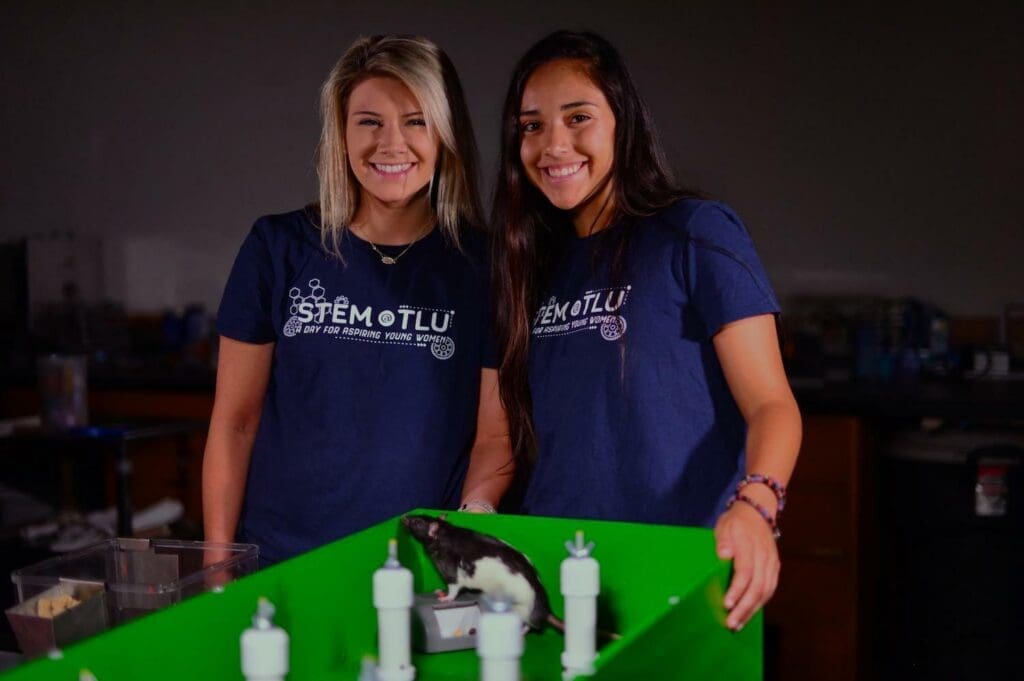
Conducting original research prepares students for success in graduate school and the workplace. TLU students commonly present their research at professional conferences, both regionally and nationally. TLU’s Psychology department supports student research and travel costs through endowed accounts. Students have presented research on a broad range of topics, with previous research including:
- Pain and Hemodynamic Responses to Violent and Non‐Violent Media Exposure
- Mapping Mental Health Services: A Collaborative Analysis Using Geographical Information Systems
- Place Preference and Aversion Learning in Rats Following Prenatal Exposure to Alcohol
- The Relationship Between Personality Traits and Religious Experience
- Effects of Visual Cues on Gaze Direction
- The Shifting Tide: People’s Reactions to Reproductive Rights and Party Affiliation
- Financial Burden, Wellbeing, and Parenting Stress in Mothers of Children with Autism Spectrum Disorder
- Post‐Confirmatory Modification of the Multi‐Faceted Conservatism Scale
- COVID‐19 and its Effects on Reported and Solved Murder Rates in Texas
Students can pursue unique undergraduate research opportunities at TLU and work with tenured faculty members to conduct original research. The TLU Synesthesia Research Team is a prestigious research group studying neurodiverse sensory experiences, available to students who wish to apply.
Texas Undergraduate Research Day Showcases Student Projects
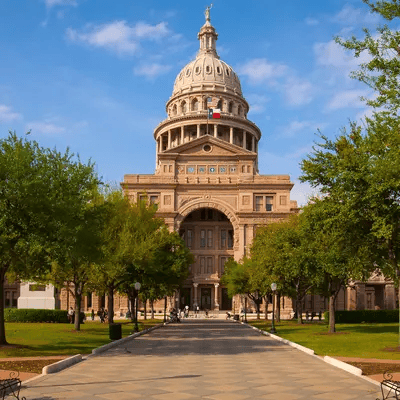
Integrated Science and Psychology double major Elise Gray’s research was selected as a runner-up for her project, “Monolingual and Bilingual College Students’ Performance on English and Artificial Stroop Tests.”
In addition to presenting at the Texas State Capitol, the team also presented their work at the Southwestern Psychological Association’s annual convention in April 2021. Gray is now at the University of Texas Health Science Center in San Antonio where she is earning a Doctorate in Occupational Therapy.
Internships & Graduate School Programs
Internships: Internships are another important way to distinguish yourself from your peers. Psychology students can gain real-world experiences in the field through interning at the Guadalupe Regional Medical Center Hospice Program, the Seguin ISD Psychology Program, the Guadalupe Family Violence Shelter, Child Protective Services, and private counseling offices. Interning experiences help our students become well-rounded so they can succeed in academic or clinical settings following graduation.
Graduate Programs: Our psychology alumni have succeeded in diverse graduate programs, including but not limited to:
- Arizona State University
- Rice University
- The Ohio State University
- The University of Nebraska
- The University of Texas at Austin
- The University of Texas Health San Antonio
- University of Connecticut
Alumnus Focusing on Work in Clinical Mental Health Counseling
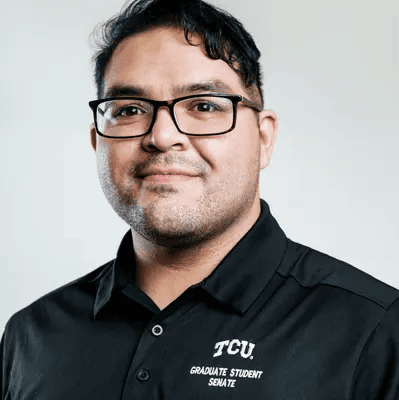
With more people than ever seeking treatment for anxiety and depression, graduates like Julian Gomez ’18 want to help as many individuals as possible.
After earning a Master of Education in Clinical Mental Health Counseling from Texas Christian University, the TLU psychology alum says he was often sought out by friends and family when they needed to open up about their lives. He now sees those kinds of conversations as his professional calling. Gomez is currently pursuing a PhD in the University of Texas San Antonio’s Counselor Education and Supervision program.
fNIRS Lab
As part of an ongoing research project, students Macey Barton, Makayla Unks, Abby Becerra, Malia Mikol, recent graduate Lance Radtke ’22, Psychology Professor Dr. Scott Bailey, and Assistant Psychology Professor Dr. Elizabeth Woods collaborated on neuroscience projects in the functional Near-Infrared Spectroscopy (fNIRS) Lab.
FNIRS instrumentation permits ecologically valid, real-world insight into brain activity while participants engage in cognitive tasks that are common in academic settings and standardized assessments of scholastic aptitude. The research teams investigated brain regions involved in easy and difficult language and math tasks. In the language experiment, participants were instructed to attend to letters in a list of familiar and unfamiliar words.
They were slower and less accurate at performing the task with familiar words, perhaps because participants were considering the meanings of the words rather than their constituent letters. Results from the math experiment extend the sparse fNIRS literature on mental math. Math anxiety influenced speed and accuracy during simple and complex multiplication and order of operations tasks. A key takeaway from this research was that participants activated left and right hemispheres when tasks were more cognitively demanding, consistent with neuroimaging data from other labs.
Results from both projects raised many additional questions the group looks forward to pursuing. The research teams are grateful for the generous financial support of Knaier, Inc. and alumnus Mark Knaier ’82 who supports the fNIRS lab.
Special Events for Psychology Students
Social and academic events for students, alumni, psychological professionals, and the community at large are hosted on a regular basis. Each year, the department sponsors PSYesta, an annual alumni dinner held during Homecoming weekend as an opportunity for current and former students to meet and network.