
For a writer, there is nothing more thrilling than the moment you find out your work is going to be published—to know that your words and your thoughts are going to reach other people. For TLU alum Garrett Garza, that moment happened just after he’d returned from a powerlifting meet with a group of student-athletes he was coaching at the time.
His former TLU Texas history professor, Dr. Kat Walters, gave him a call on the bus ride back from the meet. Understandably, Garza couldn’t answer the call, but once he’d seen his students safely home, he phoned Walters. It seemed that a paper Garza had written during his sophomore year at TLU—about a tragic accident that happened in 1927—had been selected for publication in the Handbook of Texas, the authoritative encyclopedia of the Lone Star State, published by the Texas State Historical Association.
“For a moment, I didn’t even know what to say. I just sat there in complete shock, trying to process it,” Garza says. His fiancée Jillian—now his wife—was with him, and rushed to find the article online, and began reading it aloud. “Hearing words I had written years earlier, now printed and published for others to read, was overwhelming in the best possible way,” says Garza. “It felt surreal, almost like I was listening to someone else’s story.”
He’ll always cherish that memory. “That moment meant more to me than I can fully express. It was validating, humbling, and emotional all at once. It reminded me why I love writing and researching, and it’s a feeling I’ll carry with me for the rest of my life.”
Back at TLU, the assignment that spurred that article in the first place had been an extra‑credit opportunity. “If we submitted an article for potential publication, it would count toward our final grade,” Garza says. Dr. Walters encouraged her students to choose a personally meaningful topic—something connected to their hometown or upbringing. “That guidance ultimately led me to the subject I chose.”
That subject was the Baylor University bus crash of 1927, when a bus carrying the Baylor basketball team from Waco to Austin collided with a train in Round Rock one rainy January day. The bus was completely demolished, many were injured, and ten students—who would go down in history as the Immortal Ten—perished. Ninety years to the day later, “in the city of Round Rock on January 22, 2017, the Mays Street bridge over the crash site was dedicated as the ‘Immortal Bridge’ in their honor,” Garza wrote in the piece.
As a Round Rock native, he’d seen that bridge before. Back in junior high school, in fact, he’d taken a tour of local historic sites. The tour included a stop at the bridge where the Baylor bus crash had occurred. “I remember seeing the small memorial there and learning about the tragedy,” he recalls. “Even at that age, the story stayed with me.”
Could he have imagined back then that one day he’d publish an account of that moment in history, bringing it to light for others? Probably not. But when he chose to do that extra credit assignment years later, the Immortal Ten came to mind. He searched the Texas State Historical Association’s database and was surprised to find that no one had contributed an article about the topic yet. “I chose it because it is an important and often overlooked part of my community’s history,” Garza explains. “While the crash is undeniably tragic, I felt the story deserved to be told not only for its historical weight, but also from the perspective of the town where it happened.”
These days Garza is knee-deep in history on a daily basis. He teaches social studies at Legacy High School in Midland, Texas, where he also serves as a varsity assistant football coach and a varsity assistant girls soccer coach. He’s happily sharing life with wife Jillian, who is currently head coach of a new softball program at Odessa Compass Academy. “I could not be more proud of the leader and educator she has become,” says Garza.
Between work and home, life keeps him on his toes, but he’s still making time to delve into history—and he’s still writing about it. “I continue to stay active in writing and research, even while balancing my responsibilities to my students,” he says. “Recently, I’ve focused on smaller historical stories from across Texas that could be incorporated into future editions of the handbook. I am currently developing work on the history of Round Rock as well as broader topics in Texas sports history and notable biographical figures in the state’s past.”
He’s also conducting research and writing within the realm of education, about the effectiveness of effort-based learning in underprivileged classrooms. “This project has allowed me to combine my academic interests with my passion for improving educational outcomes, and it remains an important part of my ongoing professional development,” he says.
Garza is deeply dedicated to his work. “What I love most is the opportunity to make a meaningful impact on students’ lives every single day,” he says. “It’s easy to overlook how significant that responsibility is, but educators truly help lay the foundation for how young people see themselves, what they believe they’re capable of, and how supported they feel as they navigate their formative years.”
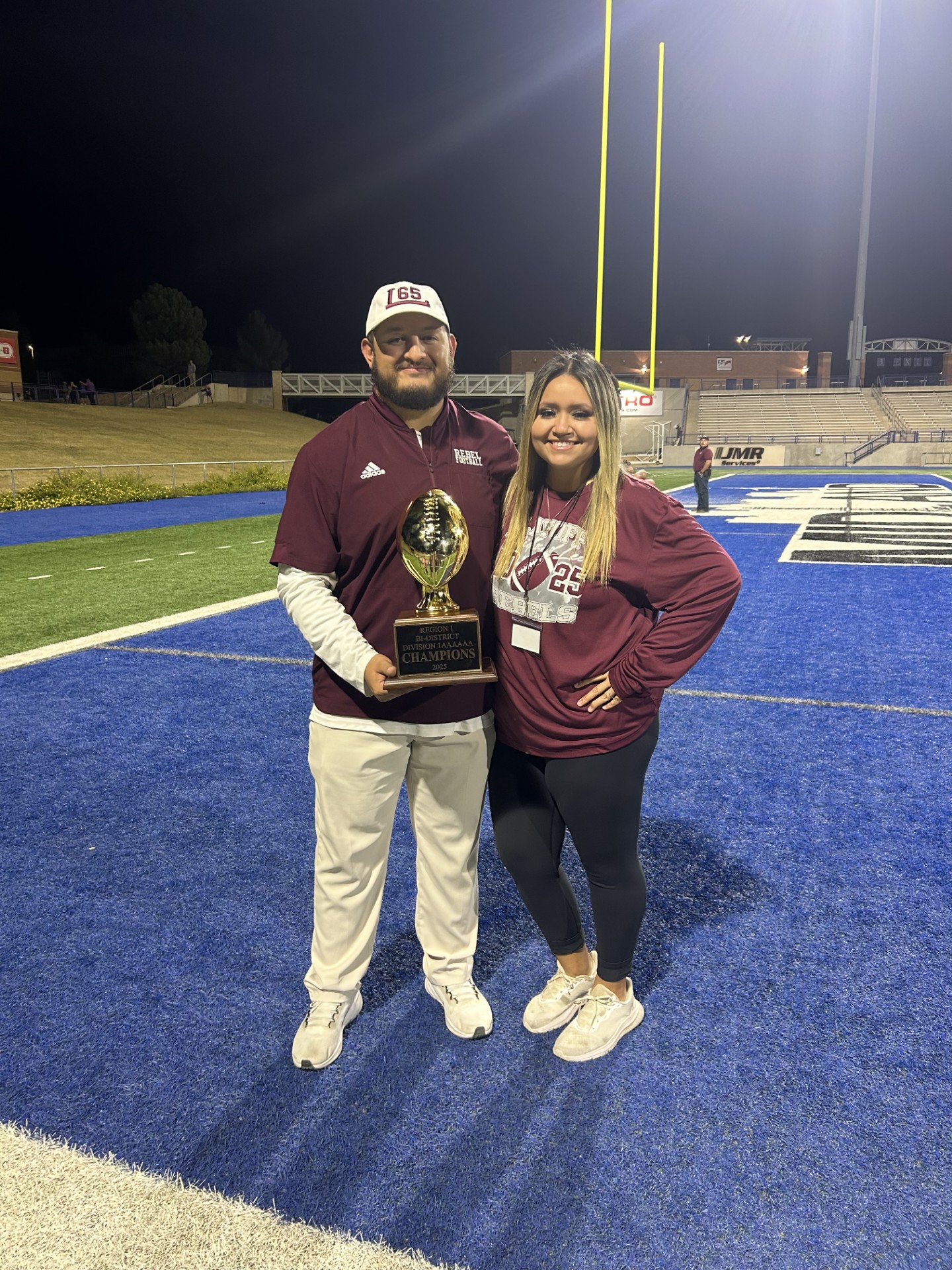
Garza has seen that teaching and coaching can be far more profound than the lessons taught in classrooms and on playing fields. “The lessons we teach, the encouragement we give, and the consistency we provide can shape a student’s future long after they leave our halls,” he says. “In some cases, it can even change the trajectory of their families and the generations that follow. That kind of impact begins simply—with caring deeply about the young people we serve and showing up for them every day.”
And so he brings the same sense of gratitude and humility to his work as a teacher as he does to his work as a writer. “I feel incredibly grateful to be in a position where my work can help change lives, and I don’t take that privilege lightly.” To read Garza’s article, click here: https://www.tshaonline.org/handbook/entries/baylor-bus-crash-of-1927.