
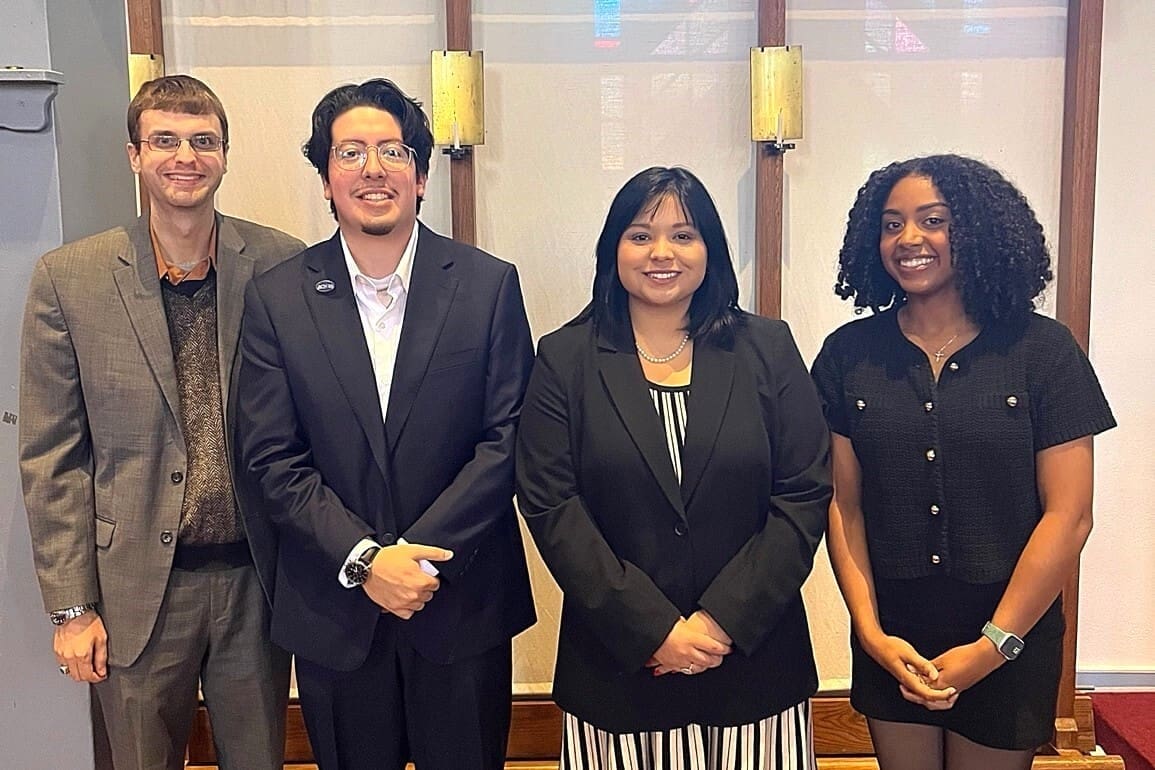
Political science professors from around the United States recently joined TLU students and faculty for a multi-day academic conference centered on civic engagement at faith-affiliated colleges and universities. The conference was generously supported by the Brandes Fund for Religious Activities.

Dr. William O’Brochta, assistant professor of political science, said that the conference was part of an initiative to bring together faculty with similar interests in civic engagement who may not have otherwise had the opportunity to learn from one another. Attendees represented California Lutheran University, Valparaiso University, Muhlenberg College, Saint Leo University, St. Edward’s University, and Baylor University. Faculty were selected based on their own expertise in civic engagement scholarship and practice as well as to represent a variety of institutions that share geographic location, institutional size, and/or faith-affiliation to TLU. Through this diversity, the conference aimed to demonstrate how institutions and faculty have approached and successfully navigated a wide-range of opportunities and challenges related to civic engagement work.

More than a dozen TLU students presented as part of the conference in a variety of sessions designed to engage participants in meaningful conversations on different aspects of the conference theme. Ainsley Lake, Monica Sitachitta, and Emei St. Laurent ran a panel reflecting on the meaning of faith in civic engagement work, while Andie Lozano-Lomeli, Allegra Negrete, Izzie Stephens, and Ruby Wilsford considered challenges and opportunities of civic engagement at faith-based institutions. Mase Aleman, Gigi Baeza-Smith, Ainsley Davis, Matthew DeLeon, Jenna Newman, and Eleanor Puchot served as discussants for papers submitted by the faculty attendees. Dr. H. David Baer, Professor of Theology and Philosophy, led a session analyzing texts about faith and civic life. Dr. O’Brochta moderated the sessions.
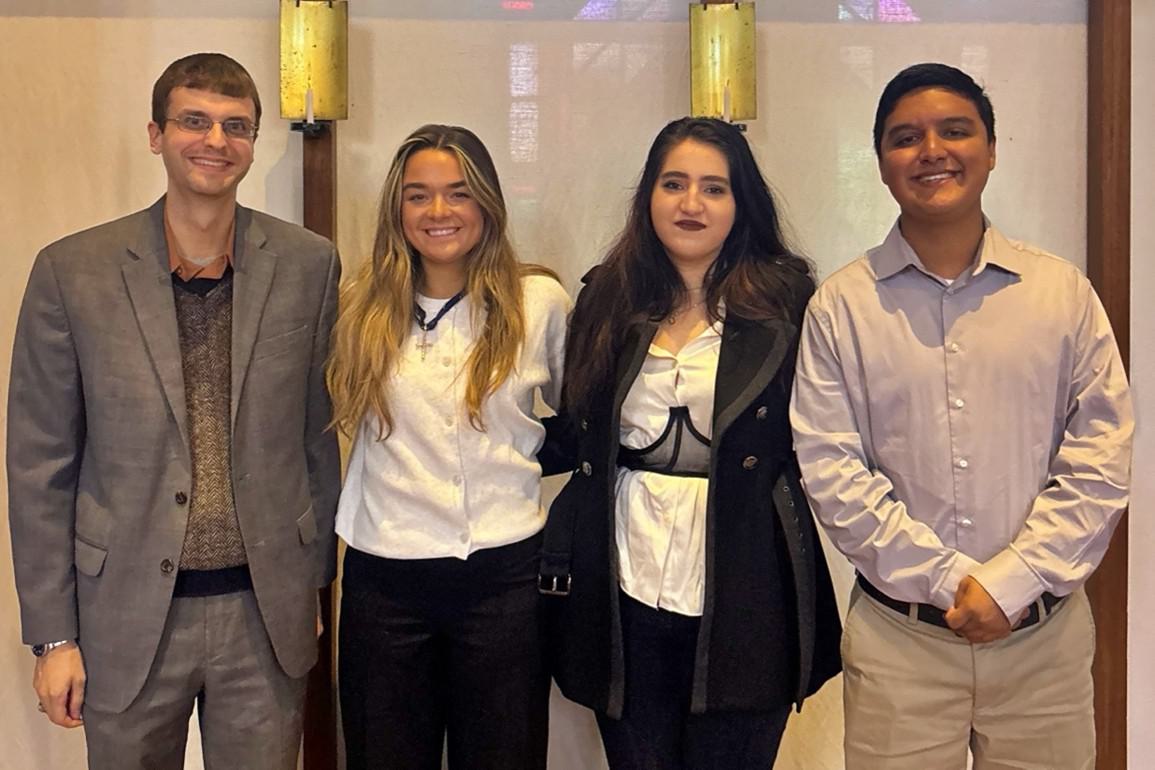
“The combination of TLU’s strong faculty-student collaborations and connections to national conversations about civic engagement among political scientists made this conference possible,” said O’Brochta. Students worked to prepare for their roles in small group meetings during the lead-up to the conference. “Every one of the professors complimented our students on their work, both in terms of how they engage and lead on campus and their preparation and delivery of remarks at the conference.”
Andie Lozano-Lomeli, a student who attended and participated in the conference said, “This conference reminded me that at a time when civic responsibility feels most urgent, learning and growing is vital through collaboration, and open dialogue allows for the expansion of ideas, especially in the context of a faith-based institution.”
Conversations from the conference continue after its conclusion, with work among faculty on a collaborative piece ongoing. “I hope that we can use this conference to redouble our civic engagement efforts and to remind ourselves of the many opportunities to learn from institutions similar to ours and from our students,” O’Brochta said.