

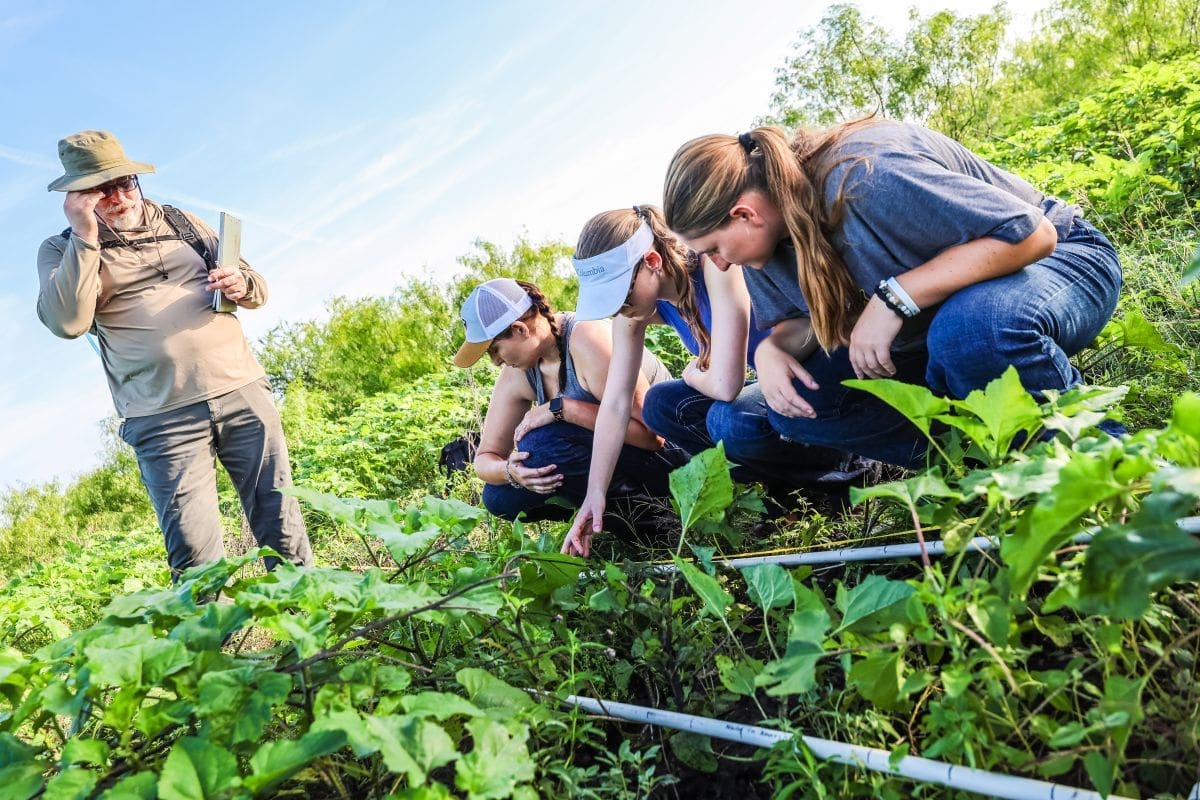
One of TLU’s marks of distinction is the abundance of opportunities for undergraduate students to take part in faculty-led summer research. Over the summer, our students were busy working in the lab, in the field, and even out on the lake! Check out a few of the highlights from the summer of 2026!
Biology
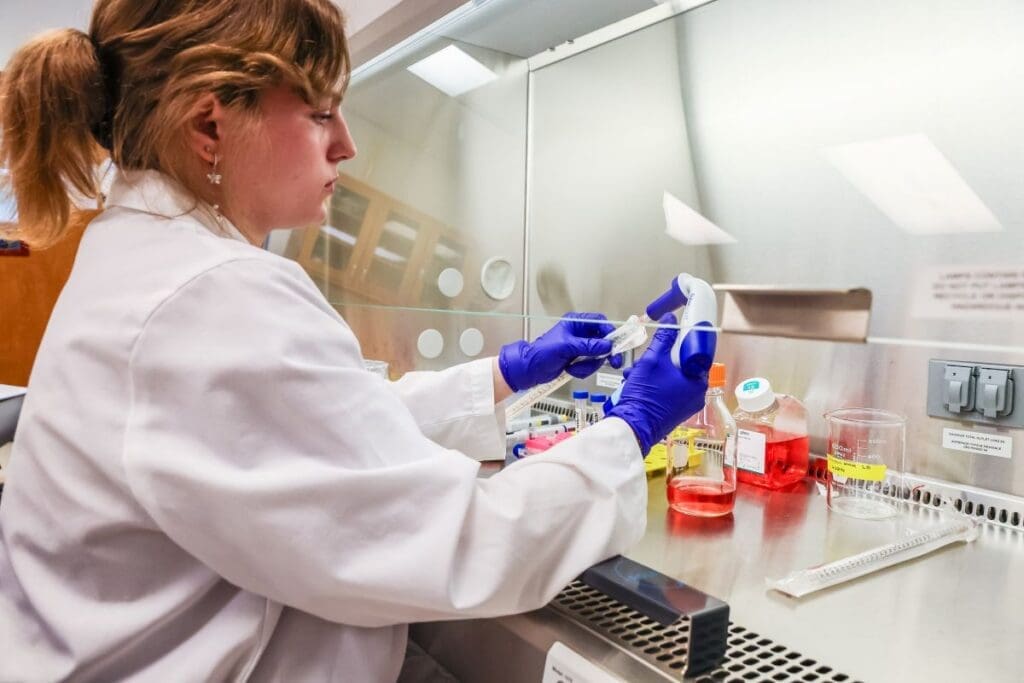
Since the COVID 19 pandemic, many people have become more aware of the importance of their immune systems but may not realize how what they eat affects the body’s ability to stay healthy. Working with Assistant Professor of Biology Dr. Ashley Neely, biology students, senior Lisa Busby and junior Brittany Bell, spent their summer investigating how different diets and macronutrients affect the immune system. By testing how immune cells grown in the lab respond to high sugar levels and ketones, students were able to explore how common diets (e.g., ketogenic “keto” diets) and diseases (e.g., diabetes) may influence chronic inflammation.
Political Science
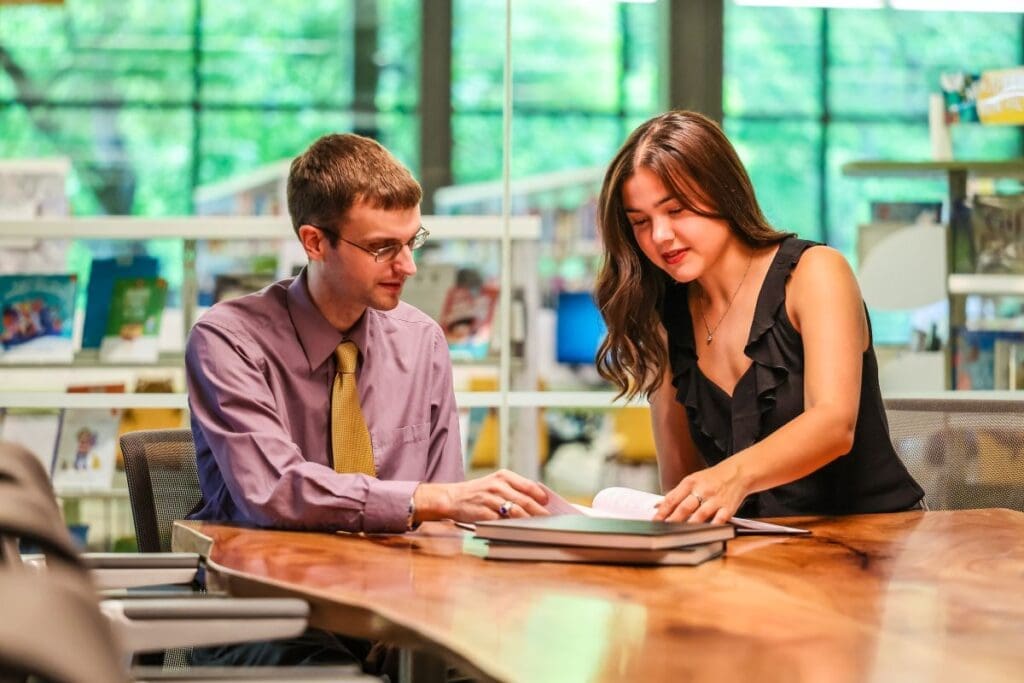
Senior communication studies and political science major Andie Lozano-Lomeli and Dr. William O’Brochta, assistant professor of political science, studied how increased community involvement and political engagement can lead to more productive workplace relationships. Their research points to skills that people develop through civic engagement—like the ability to have productive dialogue across differences—as transferrable to workplace settings. As people often spend substantial time at work, the project aimed to help to explain an important component of political and social behavior.
Computer Science
Under the guidance of Associate Professor of Computer Science Dr. Ridwan Noel, students Cesar Valero and Nathan Weitman designed and evaluated a domain-specific educational chatbot for undergraduate computer science topics using Retrieval-Augmented Generation (RAG) to improve factual accuracy by combining document retrieval with a large language model. Students built both a baseline chatbot and a retrieval-enhanced version, then empirically compared their performance in answering technical questions.
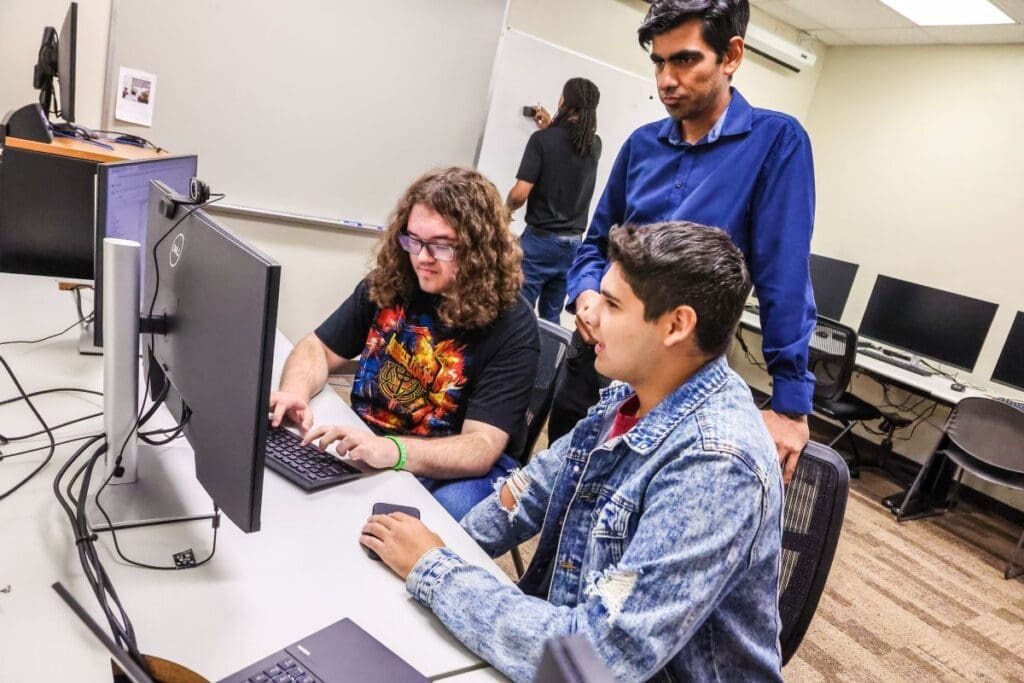
Dr. Noel also oversaw students Mason Wallace and Owen Garcia as they investigated how different prompt engineering strategies affect the quality of AI-generated educational explanations for academic topics such as programming, mathematics, and data structures. Their challenge was to systematically design and compare multiple prompt styles to evaluate their impact on explanation clarity, correctness, completeness, and overall usefulness for learning.
Assistant Professor of Computer Science Dr. Zahidur Talukder oversaw students Duncan Jenkins and Morgan Grimm as theyexamined the environmental tradeoffs of electric vehicle charging in Texas by comparing the water consumption, water stress impacts, and carbon emissions of EVs versus conventional gasoline vehicles under different charging scenarios. The aim of the study: to identify when EV charging provides the greatest sustainability benefits and develop a framework that can be expanded for broader national analysis.
Math
Students CJ Borchert and Victor Estrada worked with Dr. Betseygail Rand and Dr. William Hager on the mathematics of electoral redistricting.
Chemistry
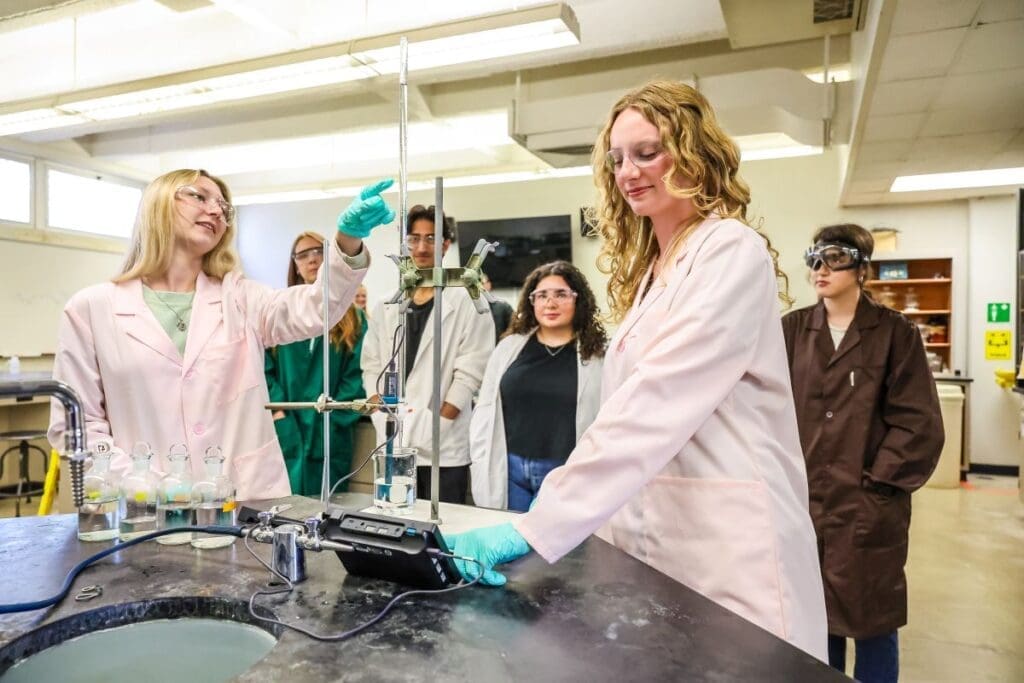
Assistant Professor of Chemistry Dr. Jacques Jean-Francois and his students Madison Marody and Dharmendra Ramsingh performed research involving hydrogels.
Meanwhile, Assistant Professor of Chemistry Dr. Corey Thompson and students Jenna Slussler and Allison Candler—based on the fact that heat from the sun is trapped in urban areas more than in rural areas due to heat-absorbing materials and denser urban development—worked on designing reflective paints to mitigate these issues that drive up the cost of cooling homes and buildings. Students created mini homes and tested the cooling effect of their paints.
Team RICE (River and Inland-Water Chemical Evaluations) Team 12.0—made up of students Kenna Bray and Miranda McCarson, under the guidance of Associate Professor of Chemistry Dr. Alison Bray—got out to Canyon Lake, where they collected water samples from four locations along a transect in the middle of the lake, from upstream (near the river entrance) to downstream near the Canyon Lake Dam. Then they returned to the lab to evaluate the samples for water quality.
What We’ve Learned: Research 2025
We love telling you what our summer researchers are up to every year—but do you ever wonder how last year’s research turned out? Here’s a little taste of what we learned through our research last summer.
Allegra Negrete and Assistant Professor of Political Science Dr. William O’Brochta worked on legal research related to higher education accessibility and student support. The Network of ELCA Colleges and Universities asked Allegra to develop a white paper on these legal issues, which she delivered to help inform their decision-making on the current legal climate in higher education. Allegra graduated in May with her BA in political science, and she is currently a first-year law student at Penn State Dickinson Law.
Associate Professor of Computer Science Dr. Ridwan Noel and student Conner Petty undertook a project, “On Brain-to-Text Translation: The Ability to Predict Text from EEG Data,” which investigated brain-to-text translation using EEG data with end-to-end CNN-Attention models. It explored whether neural signals can be effectively mapped to text without relying on pretrained models. The resulting research paper was accepted for publication at the International Conference on Computer Science and Intelligence Systems (ICCSIS) in 2025. Conner also presented the research poster at the National Conference on Undergraduate Research NCUR 2026.
Dr. Noel also oversaw student Lauren Shofner’s project “Comparative Analysis of AI Chatbots for Computer Program Generation,” which evaluated AI-generated code to assess how effectively AI models can handle programming tasks. It examined model reliability, ease of use for non-programmers, and the potential risks of relying on AI for more complex or security-sensitive problems. The resulting research paper was published at The Proceedings of the International Conference on Engineering, Science and Technology, (IConEST) 2025.
Assistant Professor of Chemistry Dr. Jacques Jean-Francois and his students learned that the albumin-polyethylene glycol hydrogels have a porous structure independently of the size or architecture of polyethylene glycol (PEG) used (linear, star-shaped). They found that synthesized gels showed an ability to quickly release their load of the fluorescent molecule quinine in under one hour. No significant difference was noticed in terms of amount and speed release when it comes to different types of PEGs used to synthesize the gels.
Assistant Professor of Chemistry Dr. Corey Thompson worked with students Clayton Engler and Holdin Price to develop three pigments to test their effectiveness at reflecting heat from the sun. Preliminary results indicate that these paints mitigated the sun’s heat by 2ºF.