

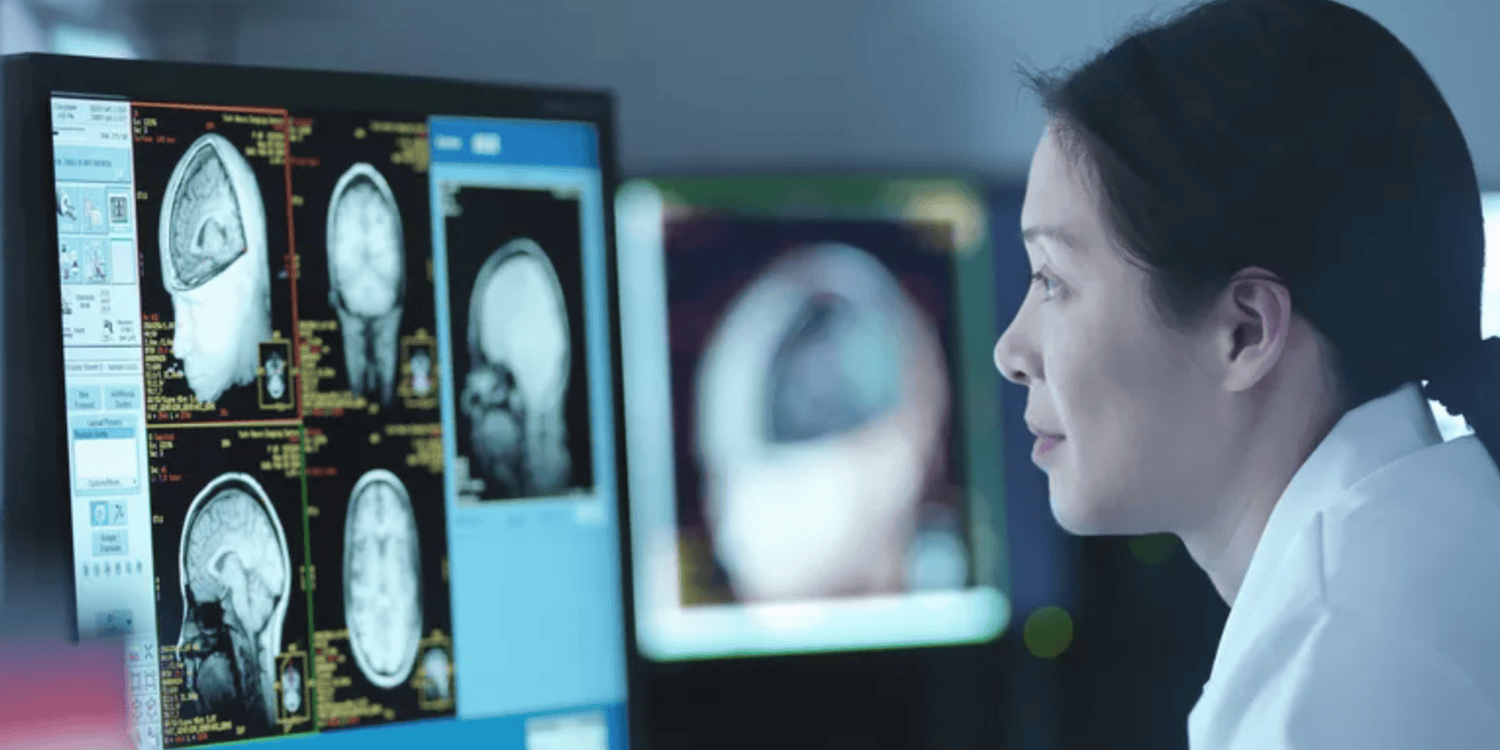
The integrated science degree program capitalizes on a range of academic programs allowing majors to pursue the breadth and depth of a handful of disciplines that will foster interdisciplinary awareness and facilitate many graduate school, professional school, and career opportunities. Additionally, this program will appeal to those interested in pursuing health-related careers that draw upon experience in related academic areas.
The program offers both a Bachelor of Arts and a Bachelor of Science degree. The BA option has a little more flexibility within the major area coursework, and in the number of available elective hours. The BS degree plan includes significant coursework in natural science disciplines, but adds enough social and behavioral science to round out students’ perspectives as preparation for further study or entering careers upon graduation.
Career Options
Possible careers for ISCI majors include physicians and medical researchers, neuroscientists, psychologists, physical or occupational therapists, academic researchers, physician assistants, science writers, educators, and many others.
Pre-Professional Health Programs
Students interested in pre-professional health programs often major in biology, biochemistry, or chemistry, although pre-professional students can come from any major. TLU offers pre-professional programs in the following professions:
- Dentistry
- Medicine
- Nursing
- Occupational Therapy
- Optometry
- Pharmacy
- Physician Assistant
- Physical Therapy
- Veterinary Science
Students interested in pursuing careers in these programs work with members of TLU’s Health Professions Committee for individualized advising. TLU and the University of the Incarnate Word (UIW) in San Antonio also have memorandums of understanding (MOU) as part of UIW’s Health Professions Pathway.
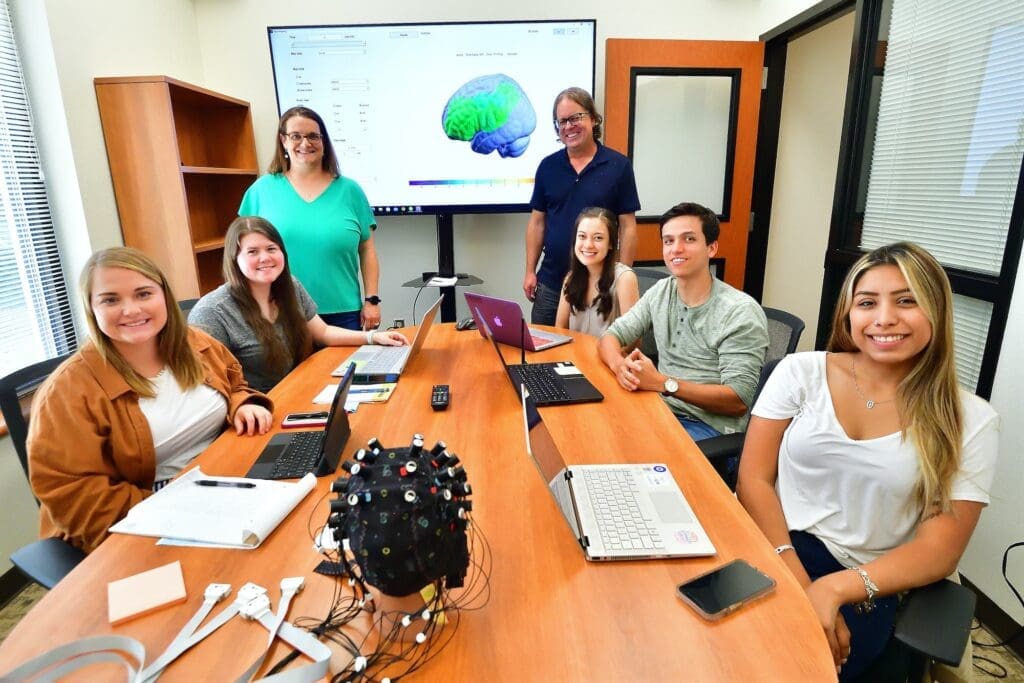
fNIRS Lab
As part of an ongoing research project, students Macey Barton, Makayla Unks, Abby Becerra, Malia Mikol, recent graduate Lance Radtke’ 22, Psychology Professor Dr. Scott Bailey and Assistant Psychology Professor Dr. Elizabeth Woods collaborated on neuroscience projects in the functional Near-Infrared Spectroscopy (fNIRS) Lab.
fNIRS instrumentation permits ecologically valid, real-world insight into brain activity while participants engage in cognitive tasks that are common in academic settings and standardized assessments of scholastic aptitude. The research teams investigated brain regions involved in easy and difficult language and math tasks. In the language experiment, participants were instructed to attend to letters in a list of familiar and unfamiliar words.
The participants were slower and less accurate at performing the task with familiar words, perhaps because they were considering the meanings of the words rather than their constituent letters. Results from the math experiment extend the sparse fNIRS literature on mental math. Math anxiety influenced speed and accuracy during simple and complex multiplication and order of operations tasks. A key takeaway from this research was that participants activated left and right hemispheres when tasks were more cognitively demanding, consistent with neuroimaging data from other labs.
Results from both projects raised many additional questions the group looks forward to pursuing. The research teams are grateful for the generous financial support of Knaier, Inc. and alumnus Mark Knaier ’82 who supports the fNIRS lab.