
College Presidents for Civic Preparedness is a coalition of more than 125 colleges and universities across the nation which have committed themselves to transforming their campuses into civic development hubs. The members come from a diverse range of ideologies and backgrounds—but they share a common goal: to equip students to learn to engage across divides, discern fact from fiction, and solve problems collaboratively.
Texas Lutheran University recently joined the coalition, affirming the university’s prioritization of three shared civic commitments: 1. Educating for democracy is central to our mission; 2. We will prepare our students for a vibrant, diverse, and contentious society; and 3. We will protect and defend free inquiry.
“Being part of this important initiative connects TLU to significant conversations in higher education around how we can best prepare our students to be active and engaged society members,” said TLU President Dr. Debbie Cottrell. “I look forward to utilizing the Coalition’s resources across all areas of campus to benefit our students and thus the world beyond our campus.”
TLU backs up its commitment to civic preparedness through numerous actions across campus.
“TLU students, faculty, and staff have long supported efforts to prepare students to engage in the democratic process both as a part of our campus community and as part of the broader world,” said Dr. William O’Brochta, assistant professor of political science and chair of the Division of Social Sciences at TLU.
Examples of those efforts: First, there is the Jon & Sandra Moline Center for Servant Leadership, which partners with the community in various ways and supports the university’s MOVE Texas student group, a nonpartisan, nonprofit, grassroots organization working to build power in underrepresented youth communities through civic engagement, leadership development, and issue advocacy.
TLU has consistently been recognized by the non-partisan ALL IN Campus Democracy Challenge for cultivating informed citizens who are also engaged voters.
The university also sponsors local election forums, inviting candidates to campus, and has a history of hosting faculty-and student-led opportunities for dialog about democracy, including the Teach Peace initiative, collaborations to bring ELCA leaders to campus, and hosting a conference on faith-based civic engagement with faculty from around the country and featuring student presentations.
“When we learn to listen, learn, and respond thoughtfully, something remarkable, almost magical, happens. As individuals and as a community, we grow stronger, wiser, and more capable in every way that is important. These skills help sustain our democracy and prepare us for a future in which our ability to coexist and work together is essential to the well-being of all.” ~Liz Lowery, professor of communications at TLU
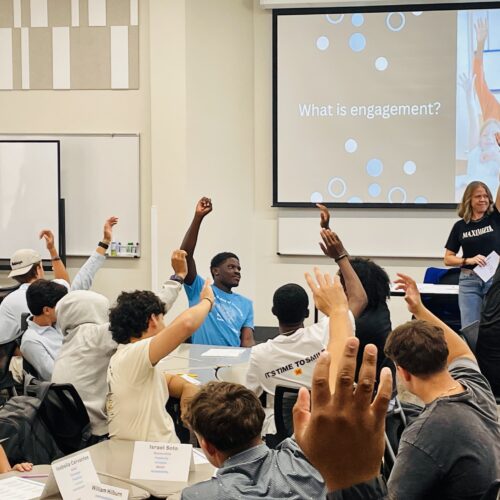
And of course, TLU’s overarching approach to education encourages students to engage and explore the concepts of democracy and what it means to be civically responsible. Challenging topics inspire meaningful conversation, leading to the opportunity to see both sides of issues and to make informed decisions. TLU faculty members have long been recognized for their civic engagement work and hold national leadership roles in this area.
“By joining this consortium, TLU makes an institution-wide commitment to support existing student-, faculty-, and staff-led initiatives and to consider ways to re-emphasize the components of our core values that center on education through ‘open dialogue,’ community through ‘promoting the common good,’ and faith through ‘inviting exploration and discovery’ at an institutional level,” said O’Brochta.
Professor Liz Lowery, professor of communications at TLU, agrees. “When we learn to listen, learn, and respond thoughtfully, something remarkable, almost magical, happens. As individuals and as a community, we grow stronger, wiser, and more capable in every way that is important. These skills help sustain our democracy and prepare us for a future in which our ability to coexist and work together is essential to the well-being of all.”