
A Legacy of Healing
The desire to heal must run deep in the Rodriguez family. Brothers Limael (“Lee”) and Joel, both TLU alums, followed their parents’ footsteps into the field of medicine. Their father is an orthopedic spine surgeon, their mother a nuclear medicine physician—both completing their residencies in New York and later settling their family in Texas.
“Joel and I grew up with two physician parents, so medicine was very much a part of our lives from an early age,” says Lee. “Watching both of them shaped how we viewed medicine and certainly played a big role in both of us becoming doctors.”
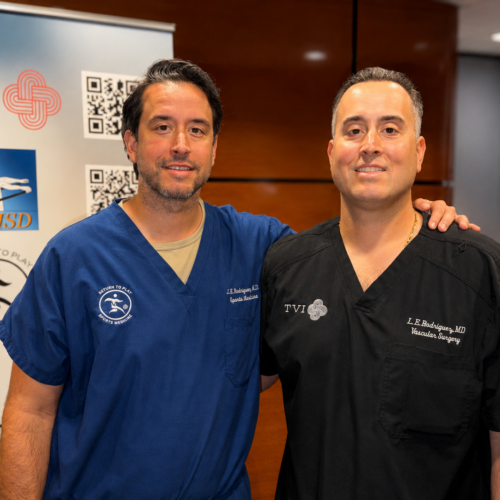
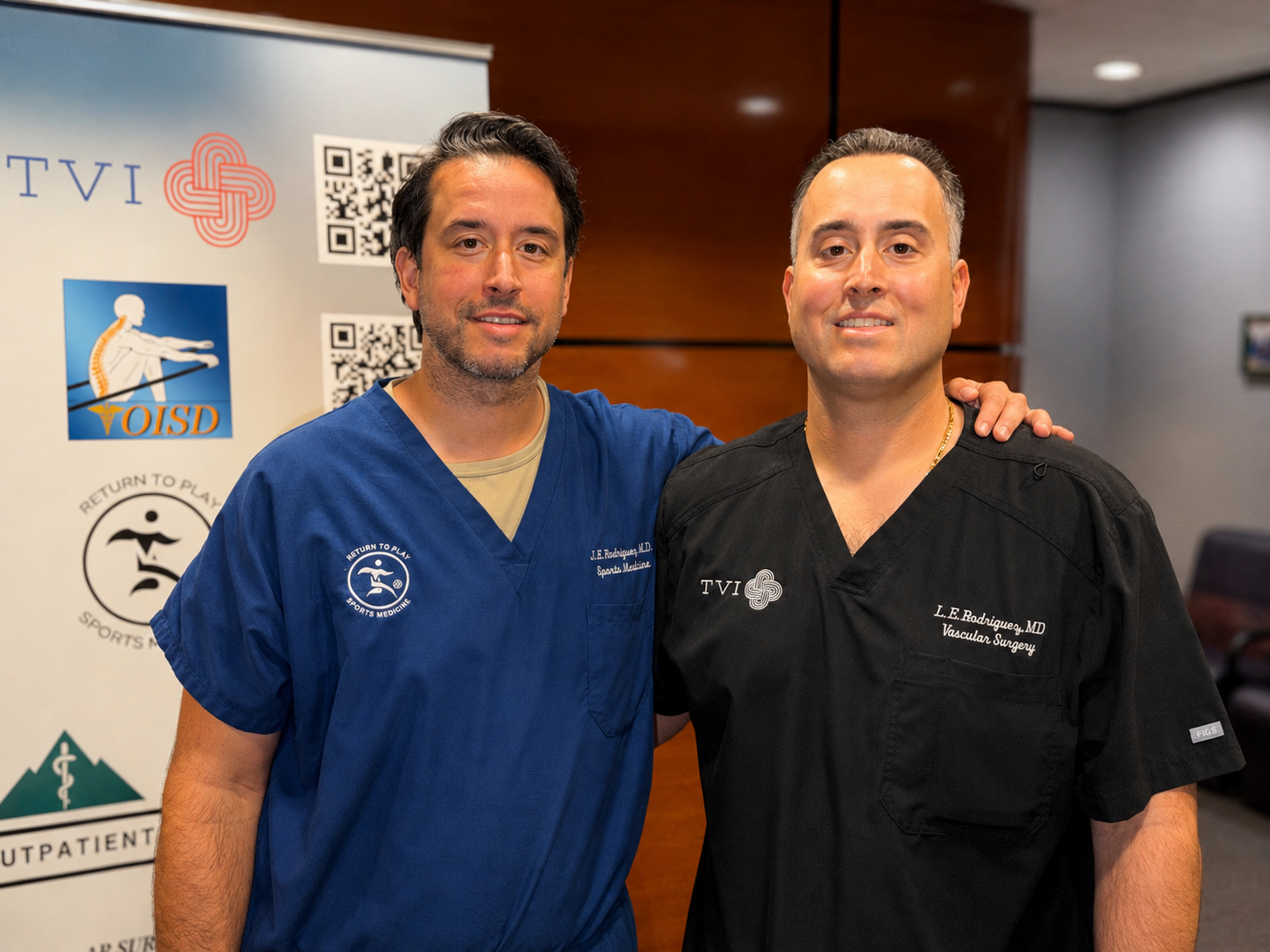
The brothers graduated TLU a year apart. After following separate roads spanning countless miles in order to get their footing in their respective fields of medicine, Lee and Joel’s paths converged. Lee is a vascular surgeon, and Joel, a sports medicine physician—and now their practices, as well as their father’s, are housed within a shared clinical space, their varied skillsets complementing one another.
Lee
Lee earned his BA in biology and chemistry from TLU in 2007. From there, he went to medical school at Universidad Central del Caribe. His path post-med school saw him as a postdoctoral fellow at Houston Methodist, a surgery resident at Centro Médico Episcopal San Lucas, a representative of the American College of Surgeons Resident and Associate Society, and a vascular surgery fellow at Eastern Virginia Medical School and then University of Colorado Anschutz, the largest academic health center in the Rocky Mountains.
These days, he’s busy working as a vascular surgeon in and around Houston and leading the independent vascular practice he founded and continues to build, Texas Vascular and Imaging. “Our practice has grown into a comprehensive vascular platform that includes vascular ultrasound technology, limb salvage, venous disease, and outpatient vascular procedures,” he explains. “A large part of my career now also involves the business and leadership side of medicine—building the practice, developing an ambulatory surgery center, teaching, research, and trying to create a model where physicians can still have a meaningful degree of independence while taking care of patients.”
“TLU was also a small enough environment that relationships mattered. You weren’t anonymous. Professors knew you, people expected something from you, and you were held accountable. That experience helped shape the way I approach medicine, leadership, and running a practice today.” ~Lee Rodriguez
He credits his years at TLU with helping to prepare him—sometimes in unexpected ways—for the many things he’s accomplished since graduating. “TLU gave me a strong foundation, but probably not in the way I appreciated at the time,” he says. “Playing college soccer while managing academics taught me discipline, accountability, resilience, and how to work within a team. Medicine requires all of those things, particularly through residency and surgical training.”
Lee also found great benefit in TLU’s smaller size. “TLU was a small enough environment that relationships mattered. You weren’t anonymous. Professors knew you, people expected something from you, and you were held accountable. That experience helped shape the way I approach medicine, leadership, and running a practice today.”
Joel
Joel graduated from TLU in 2008, then went on to earn his master’s degree in aerospace physiology and medicine at King’s College London. After medical school at Universidad Central del Caribe, he completed his residency training in Family Medicine at Methodist Hospital in Houston, followed by a fellowship in Primary Care Sports Medicine at Christus Santa Rosa Hospital in San Antonio. His practice, Return to Play Sports Medicine, specializes in helping athletes recover from injuries and improve performance. Together with their dad, he and Lee make up the medical team at Orthopaedic Institute for Spinal Disorders, which their father founded.
“TLU was a significant stepping stone for me professionally,” says Joel. “I always say that the tough curriculum got me ready for medical school. Majoring in molecular biology and a minor in chemistry put me in the classes of legendary professors including Dr. Hettinger, Dr. McClusky, Dr. Bohmann, Dr. Wasmund, Dr. Abbasian, and Dr. Lievens, just to name a few who supported my career directly.”
But like Lee, Joel also learned a lot of important lessons away from the classroom, out on the soccer field. “I played soccer all four years with TLU men’s soccer, which helped me combine and propel my love of sports, medicine, and science throughout my career afterwards,” he says.
Bulldog Connections
As busy as they stay these days, the brothers’ connection to TLU has never faltered.
“We have stayed very connected with the TLU soccer program through Coach Eddie Salazar and teammates,” says Joel. “We have attended the alumni soccer events for years and donate to the program where we can. I was honored to give a lecture on preventing collegiate soccer injuries to the TLU men’s team in 2024.”
Lee says the most meaningful connections are the relationships built during his undergrad years. “I made lifelong friends at TLU, and I still keep in touch from time to time with some of my former chemistry and biology professors. I have a tremendous amount of gratitude for the mentorship they gave me and for the friendships that have lasted well beyond college.”
Like Joel, he keeps up with Bulldog athletics. “I’m still a big fan of TLU sports in general, and it has been impressive to watch the success the university has had across so many programs over the years,” he says. “Of course, having played men’s soccer there, I still follow the program closely and take a lot of pride in what they’ve accomplished. Those relationships—with professors, friends, and teammates—are what have kept TLU an important part of my life long after graduation.”
Staying connected also means offering up a few words of wisdom to current Bulldogs, from two who have been in their shoes. Both brothers agree that getting the most out of your college years begins with gratitude. “Recognize the opportunity you have,” Lee advises. “Being able to study at TLU is a privilege, and you may not fully appreciate that until years later.” He’s also a big believer in the value of the journey—not just the destination. “Have big goals, but don’t rush past the work in front of you. You can’t cheat the process. Show up, do the small things well, learn from the people willing to teach you, and build genuine relationships.”
He says it’s important to stay humble. “You can be ambitious and successful without ever believing you are above the people around you. In the workforce, and especially in leadership, people want to work with people they trust. Your plans will change. Be willing to adapt, but don’t lose your work ethic, your humility, or the way you treat people. Make the most of the opportunity in front of you.”
“This is a miniature version of society which, when you step out with your diploma, you will be faced with the real deal. There you will not be on your own though, because you will be standing on the shoulders of giants who helped you achieve an advanced knowledge base and you can face our societal problems with that Bulldog confidence.” ~Joel Rodriguez
“Enjoy and appreciate this time you have at TLU,” adds Joel. “Focus on your major, but even more important is the process of developing relationships with your professors, colleagues, and administrators. This is a miniature version of society which, when you step out with your diploma, you will be faced with the real deal. There you will not be on your own though, because you will be standing on the shoulders of giants who helped you achieve an advanced knowledge base, and you can face our societal problems with that Bulldog confidence.”