
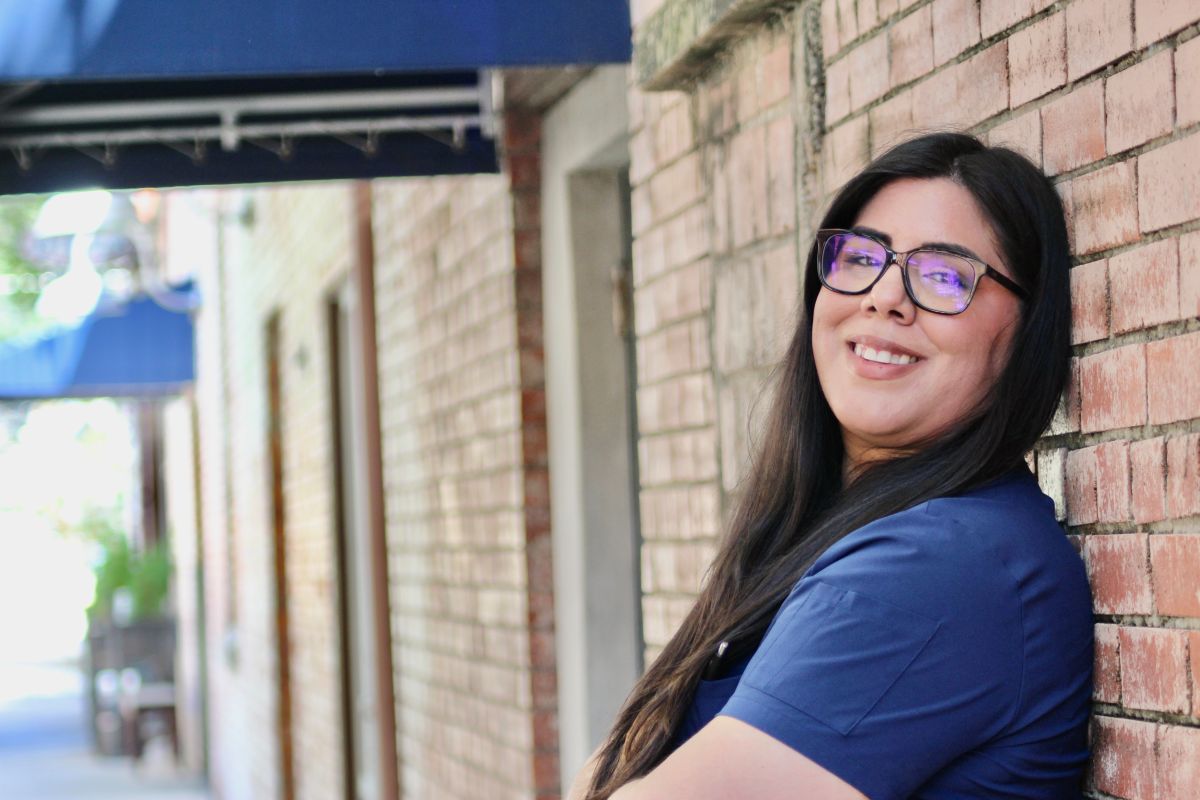
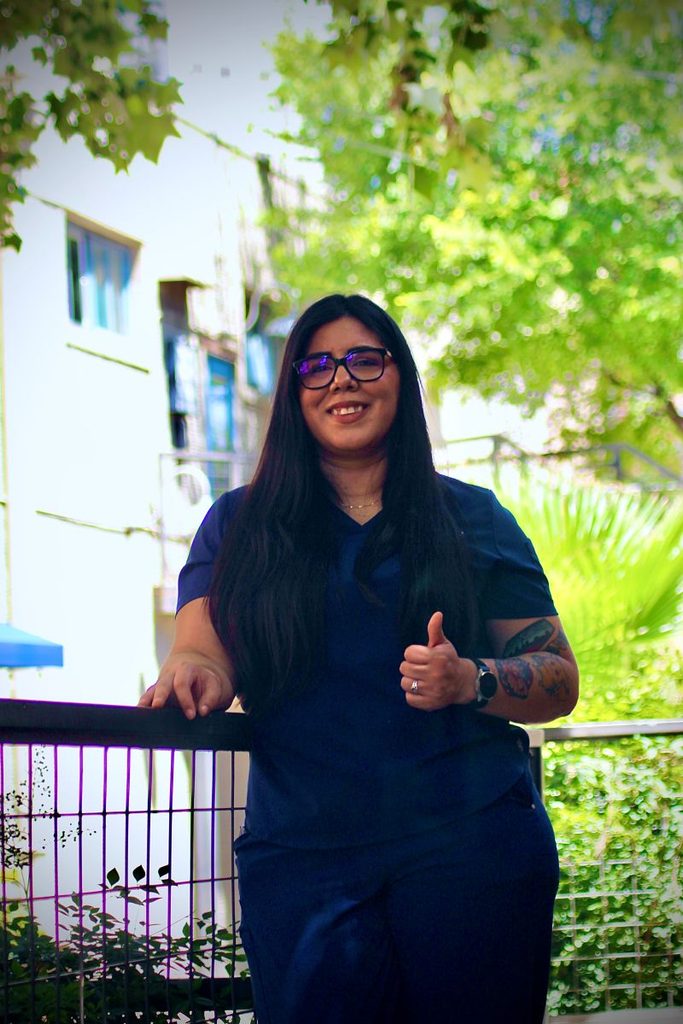
It’s hard to believe—considering where TLU alum Erika Gonzales ’22 is now—that she actually never intended to become a nurse.
Where she is now: working in the ER at University Health in San Antonio, about to enter a highly elite training program for forensic nurses. Where she was back in college: studying biology and English, growing an appreciation for communication and the power of stories.
“I had no intention of becoming a nurse,” she admits. “Much less working in critical care or emergency medicine. I always imagined myself behind the scenes, doing research and trying to understand the why behind the human experience. I thought my purpose was to understand people. I eventually realized my purpose was to walk alongside them.”
Once she earned her degree in biology and English at Our Lady of the Lake University, she went on to study applied medical anthropology at the University of North Texas, which she says helped her gain a better understanding of culture, health inequities, and human experience. All of that, believe it or not, paved Gonzales’s path to nursing. “Looking back, I realized those disciplines weren’t separate at all,” she says. “They were all preparing me for the kind of nurse I wanted to become. Nursing became the place where all those passions intersected.”
That intersection brought her to TLU, where she pursued her Bachelor of Science in Nursing at TLU’s New Braunfels campus. But what truly brought her to the field of nursing was life itself. “The biggest turning point wasn’t in a classroom . . . it was in my own life.”
Turning Point
Gonzales watched her mother navigate a heart condition, and later, was with her uncle during his final moments after a battle with cancer. “Those experiences changed the way I viewed health care. I realized that two people could have the same diagnosis but experience care very differently because of their life experiences, culture, support systems, and access to resources,” she says. “I realized my family’s experiences weren’t unique; they reflected the realities faced by many individuals from minority and underserved communities.”
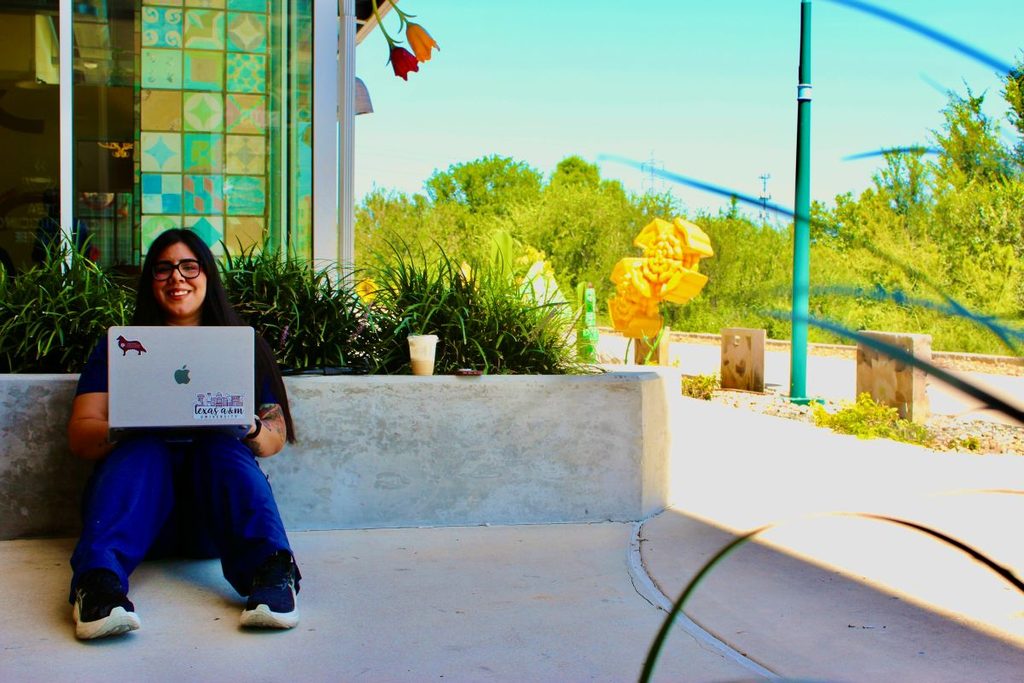
That marked the turning point. That was when Gonzales realized she wanted to do more than study the disparities that exist in our culture. She wanted to help change them.
“People sometimes describe my path as winding, but I see it as cumulative,” she says. “Every degree gave me another lens through which to understand people.” Nursing, she explains, offers the privilege of walking beside people with compassion during life’s most difficult moments. “I don’t see my education as a series of detours. I see it as the foundation that continues to shape the nurse I am today.”
That nurse works in trauma care, in emergency rooms, facing what most of us would consider some of the hardest moments in human existence. And as she moves into forensic nursing, she’ll take a step further, helping victims of abuse, neglect, violence, and assault, partnering with the legal system, and offering the truest kind of advocacy: She will not only care for victims; she will also stand up for them through her work.
“What motivates me isn’t the complexity of the work; it’s the opportunity to preserve dignity, empower patients, and ensure they feel seen, respected, and heard during some of the most difficult moments,” she says. “While people often describe this work as requiring courage, I’ve come to see it as an opportunity to meet people with compassion during some of the most vulnerable moments of their lives.”
Gonzales’s passion for advocacy has guided much of her career. For example, she helped establish her hospital’s Bereavement Committee, developing the Legacy Box initiative for grieving families of adult patients. She organized a hospital-wide Bereavement Conference, and now teaches trauma-informed care to postgraduate residents and critical care nurse fellows. “Those experiences have reinforced my belief that healing extends beyond treating physical injuries. It also means honoring a person’s story. For me, forensic nursing isn’t a departure from my career; it’s the natural continuation of it.”
Influences in Nursing School
And her years at TLU helped her get here. She notes the genuine caring of the faculty, and specifically recalls three professors who changed the course of her career and left a lasting impression. The first: Dr. Sabrina Koog. “During my junior year, when I was struggling in one of my nursing courses, Dr. Koog met me at a local taqueria to study because she knew it was an environment where I felt comfortable and could focus,” Gonzales recalls. “It wasn’t just about reviewing content; it was about meeting me where I was and reminding me that I wasn’t alone.”
Then there was Dr. Elizabeth Garcia. “Later, after I failed one of Dr. Garcia’s courses, I seriously questioned whether I belonged in nursing,” says Gonzales. “Instead of letting that be the end of my story, she invited me to meet with her privately. She saw potential in me that I couldn’t yet see in myself. That conversation changed the way I saw myself. It reminded me that one setback doesn’t define who you are or what you’re capable of becoming.”
And finally, there was Dr. Wendi Gines. “Dr. Gines challenged me in a different way,” says Gonzales. “She encouraged me to become comfortable with being uncomfortable; to embrace uncertainty, trust the process, and move forward even when I didn’t feel completely ready. That lesson has stayed with me throughout my career, from trauma critical care to the emergency department, and now as I pursue forensic nursing.”
Gonzales says that those three, “along with so many others at TLU, didn’t just teach me how to become a nurse; they modeled what it means to walk alongside someone through moments of uncertainty. Their example continues to shape how I care for patients, mentor colleagues, and invest in the next generation of health care professionals. I hope that, in some small way, I can offer others the same compassion, encouragement, and belief that they so generously offered me.”
A Healing Presence
That’s exactly what Gonzales does on a daily basis for her patients. “For me, the most gratifying part of nursing isn’t any single procedure, diagnosis, or clinical success,” she explains. “It’s the privilege to be present for some of the most significant moments in another person’s life. Whether it’s celebrating a patient’s recovery, helping someone navigate an unexpected diagnosis, or supporting a family through the loss of a loved one, I’ve learned that the moments people remember most are often the human ones. They may not remember every intervention we performed, but they remember how we made them feel.”
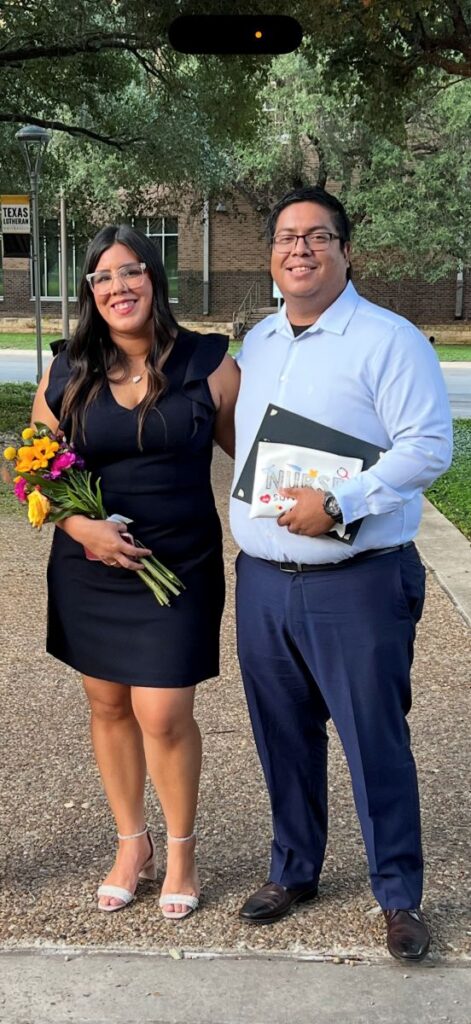
Gonzales says that healing doesn’t always look like one would expect. “Sometimes healing means helping someone feel safe. Sometimes it means giving a family the space to say goodbye. Sometimes it simply means making sure a person feels less alone.
“One phrase that has stayed with me throughout my career is: Science tells us how to care for people; compassion reminds us why. That balance is what I strive for every day. Every patient has a story, and while I may only be part of one chapter, I hope it’s one in which they felt seen, respected, and genuinely cared for.”
One way she demonstrates compassion for her patients is through curiosity. “Early in my career, I thought becoming a better nurse meant learning more procedures, memorizing more medications, and having the right clinical answers,” she says. “While those things are essential, I’ve learned that some of the best nursing happens when we slow down long enough to become curious about the person in front of us. I’ve learned that asking, ‘What happened to this person?’ can be just as important as asking, ‘What’s wrong?’ That lesson continues to shape the way I care for every patient I meet. It reinforces my belief that science tells us how to care for people, but curiosity and compassion remind us why.”